
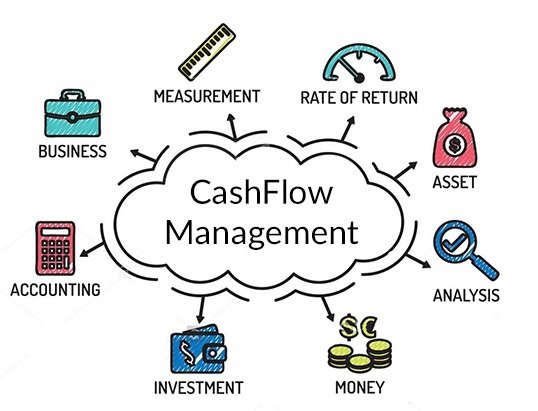
Cash Flow Management is one of the most important aspects of running a successful business. A company may have strong sales and report profits on paper, but it can still struggle if it does not have enough cash available to pay employees, suppliers, rent, taxes, loan installments, and other operating expenses.
For this reason, business owners need to understand not only how much revenue their business generates, but also when money comes in and when money goes out.
Effective cash flow management helps businesses maintain sufficient liquidity, control expenses, plan future investments, manage debt, and avoid unnecessary financial stress.
In this comprehensive guide, we will explain what cash flow management is, why it is important, types of cash flow, cash flow forecasting, working capital management, common cash flow problems, cash flow management strategies, and practical tips for small businesses.
What Is Cash Flow Management?
Cash Flow Management is the process of monitoring, analyzing, forecasting, and controlling the movement of cash into and out of a business.
Simply put:
Cash Inflows − Cash Outflows = Net Cash Flow
Cash inflows may include:
- Customer payments
- Cash sales
- Online sales
- Loan proceeds
- Investment received
- Asset sales
- Other business income
Cash outflows may include:
- Supplier payments
- Salaries
- Rent
- Utilities
- Marketing expenses
- Loan repayments
- Taxes
- Inventory purchases
- Equipment purchases
The objective of cash flow management is to ensure that a business has enough cash available when it is needed.
Why Is Cash Flow Management Important?
Cash flow is often described as the lifeblood of a business because businesses need cash to continue their day-to-day operations.
1. Helps Pay Business Expenses
A business needs cash to pay regular expenses such as:
- Employee salaries
- Rent
- Electricity
- Internet
- Suppliers
- Transportation
- Taxes
Even a profitable company can experience financial pressure if cash is not available at the right time.
2. Prevents Cash Shortages
Cash flow forecasting can help identify potential shortages before they become serious problems.
For example, suppose a business expects ₹10 lakh in customer payments next month but has ₹12 lakh in expenses due during the same period.
The business may need to arrange additional working capital before the shortage occurs.
3. Improves Financial Planning
Cash flow data helps business owners decide whether they can afford:
- New equipment
- Additional employees
- Marketing campaigns
- New inventory
- Business expansion
- Loan repayments
4. Helps Manage Working Capital
Working capital management and cash flow management are closely connected.
Businesses need to balance:
- Inventory
- Accounts receivable
- Accounts payable
- Cash
Too much money tied up in inventory or unpaid customer invoices can reduce available cash.
5. Supports Business Growth
Growth often requires additional cash.
A company may need money to:
- Purchase inventory
- Hire employees
- Open another location
- Develop products
- Increase marketing
- Buy equipment
Good cash flow management helps ensure that expansion does not create unnecessary financial pressure.
Types of Cash Flow
Cash flow is generally divided into three major categories.
1. Operating Cash Flow
Operating cash flow relates to the normal day-to-day activities of a business.
Examples include:
Inflows
- Customer payments
- Sales receipts
Outflows
- Supplier payments
- Salaries
- Rent
- Utilities
- Operating expenses
Operating cash flow is particularly important because it shows whether the core business is generating cash.
2. Investing Cash Flow
Investing cash flow relates to the purchase or sale of long-term assets.
Examples include:
- Buying machinery
- Purchasing property
- Selling equipment
- Investing in certain long-term assets
A negative investing cash flow is not necessarily bad. A growing company may spend cash on equipment or expansion that can generate future returns.
3. Financing Cash Flow
Financing cash flow relates to how a business raises and returns capital.
Examples include:
- Business loans
- New equity investment
- Loan repayments
- Dividends
- Capital contributions
Understanding all three categories provides a clearer picture of the company’s financial position.
Cash Flow vs Profit
One of the most important concepts in business finance is that cash flow and profit are not the same thing.
Profit generally reflects revenue and expenses according to the applicable accounting method.
Cash flow focuses on the actual movement of cash.
For example, suppose a company makes a ₹5 lakh sale on credit.
The business may recognize revenue according to the applicable accounting rules, but if the customer does not pay immediately, the company may not have ₹5 lakh available in its bank account.
This creates an important distinction:
Profit does not always mean cash is available.
That is why business owners should monitor both profitability and cash flow.
How to Prepare a Cash Flow Statement
A cash flow statement helps summarize cash movement during a specific period.
A basic cash flow statement includes:
Opening Cash Balance
Cash available at the beginning of the period.
Cash Inflows
Money received during the period.
Cash Outflows
Money paid during the period.
Closing Cash Balance
A simplified calculation is:
Closing Cash = Opening Cash + Cash Inflows − Cash Outflows
For example:
| Particulars | Amount |
|---|---|
| Opening Cash | ₹2,00,000 |
| Customer Payments | ₹8,00,000 |
| Other Receipts | ₹50,000 |
| Supplier Payments | ₹4,00,000 |
| Salaries | ₹2,00,000 |
| Rent & Utilities | ₹75,000 |
| Loan Payment | ₹50,000 |
| Closing Cash | ₹3,25,000 |
This simple structure can help a business understand its cash position.
Cash Flow Forecasting
Cash flow forecasting involves estimating future cash inflows and outflows.
A business can prepare:
- Weekly cash flow forecasts
- Monthly cash flow forecasts
- Quarterly cash flow forecasts
- Annual cash flow projections
A simple monthly forecast may include:
| Category | Expected Cash Flow |
|---|---|
| Customer Payments | ₹10,00,000 |
| Other Income | ₹50,000 |
| Supplier Payments | ₹5,00,000 |
| Salaries | ₹2,00,000 |
| Rent | ₹75,000 |
| Marketing | ₹50,000 |
| Loan Payment | ₹50,000 |
The forecast helps identify whether the business is likely to have surplus or insufficient cash.
Cash Flow Management Strategies
1. Create a Cash Flow Forecast
One of the most effective cash flow management strategies is to prepare a realistic cash flow forecast.
Estimate:
- Expected sales
- Customer payment dates
- Supplier payments
- Salaries
- Taxes
- Loan installments
- Major purchases
Update the forecast regularly.
2. Improve Accounts Receivable
Slow customer payments are one of the most common causes of cash flow problems.
Businesses can improve receivables by:
- Sending invoices quickly
- Setting clear payment terms
- Following up on overdue invoices
- Offering convenient payment methods
- Checking customer creditworthiness where appropriate
The faster customers pay, the faster cash becomes available.
3. Manage Inventory Carefully
Excess inventory can tie up significant amounts of cash.
For example, if a retailer purchases ₹10 lakh of products but sells only ₹3 lakh worth quickly, ₹7 lakh remains tied up in inventory.
Businesses should monitor:
- Inventory turnover
- Slow-moving products
- Dead stock
- Reorder levels
- Seasonal demand
4. Negotiate Supplier Payment Terms
If possible, businesses can negotiate reasonable payment terms with suppliers.
For example, instead of paying immediately, a business may negotiate 15-, 30-, or 45-day payment terms.
However, businesses should always maintain good supplier relationships and meet agreed payment obligations.
5. Control Operating Expenses
Regularly review business expenses.
Ask:
- Is this expense necessary?
- Is there a cheaper alternative?
- Is the expense generating value?
- Can the subscription be cancelled?
- Can suppliers offer better pricing?
Reducing unnecessary expenses can improve cash flow.
6. Maintain a Cash Reserve
Businesses should consider maintaining an emergency cash reserve for unexpected events.
Potential emergencies include:
- Sudden drop in sales
- Equipment failure
- Major customer delay
- Unexpected repairs
- Regulatory expenses
- Economic slowdown
The appropriate reserve depends on the business model and risk profile.
Working Capital and Cash Flow Management
Working capital represents the short-term financial resources available to operate a business.
A simplified formula is:
Working Capital = Current Assets − Current Liabilities
Current assets may include:
- Cash
- Inventory
- Accounts receivable
Current liabilities may include:
- Supplier payables
- Short-term obligations
- Other amounts due within the relevant period
Effective working capital management can help businesses avoid having too much cash tied up in inventory or receivables.
Accounts Receivable Management
Accounts receivable represent money customers owe the business.
Poor receivables management can create significant cash flow problems.
For example, suppose a company has ₹20 lakh in outstanding customer invoices.
On paper, the company may have substantial revenue.
But if customers delay payment for several months, the business may struggle to pay its own expenses.
Ways to improve receivables
- Establish clear payment terms
- Send invoices immediately
- Monitor overdue accounts
- Follow up consistently
- Use automated reminders
- Offer digital payment options
- Review customer credit policies
Accounts Payable Management
Accounts payable represent money the business owes to suppliers and other parties.
Effective payable management does not mean simply delaying payments.
Instead, businesses should:
- Maintain a payment schedule
- Avoid late-payment penalties
- Use agreed credit periods
- Take advantage of legitimate supplier discounts
- Prioritize critical payments
- Maintain strong supplier relationships
Good accounts payable management can improve cash-flow timing.
Cash Flow Management for Small Businesses
Small businesses often face unique cash-flow challenges.
These may include:
- Irregular sales
- Limited working capital
- Delayed customer payments
- High inventory costs
- Seasonal demand
- Unexpected expenses
A small business can start with a simple monthly cash flow system.
Monthly Cash Flow Checklist
- Record opening cash.
- Estimate customer collections.
- Record all expected expenses.
- Track supplier payments.
- Monitor loan obligations.
- Review taxes and statutory payments.
- Check outstanding invoices.
- Review inventory.
- Update the cash flow forecast.
- Maintain an emergency reserve.
Cash Flow Management for Startups
Startups often have negative cash flow during their early stages because they spend money on:
- Product development
- Employees
- Technology
- Marketing
- Office infrastructure
- Customer acquisition
For startups, cash runway is an important metric.
Cash Runway
A simplified calculation is:
Cash Runway = Available Cash ÷ Average Monthly Cash Burn
For example, if a startup has ₹30 lakh in available cash and its average monthly net cash burn is ₹5 lakh:
₹30 lakh ÷ ₹5 lakh = 6 months
This means the startup has approximately six months of runway under the assumptions used.
Cash Flow Management for E-Commerce Businesses
E-commerce businesses need particularly careful cash flow management because cash may be tied up in inventory, marketplace settlements, returns, refunds, shipping, and advertising.
Important metrics include:
- Inventory turnover
- Customer acquisition cost
- Marketplace fees
- Return rate
- Refunds
- Payment gateway fees
- Shipping expenses
- Settlement cycles
A business should calculate its actual contribution margin after considering all relevant costs rather than looking only at gross sales.
Cash Flow Management Tools
Businesses can manage cash flow using:
- Excel
- Google Sheets
- Accounting software
- Cash flow forecasting tools
- Invoicing software
- Expense management software
- Banking dashboards
Useful features include:
- Automated invoicing
- Expense categorization
- Bank reconciliation
- Payment reminders
- Financial reports
- Cash flow forecasting
The right tool depends on the size and complexity of the business.
Common Cash Flow Problems
Late Customer Payments
Customers paying late can create a cash shortage.
Excess Inventory
Too much inventory ties up cash.
High Fixed Costs
Large monthly expenses can make a business vulnerable during slow periods.
Rapid Expansion
Growing too quickly can consume cash before additional revenue is collected.
Poor Forecasting
Without a cash flow forecast, businesses may be surprised by upcoming financial obligations.
Too Much Debt
Large loan repayments and interest costs can reduce available cash.
Common Cash Flow Management Mistakes
Mistake 1: Looking Only at Sales
High revenue does not guarantee healthy cash flow.
Mistake 2: Ignoring Payment Timing
Businesses need to know not only how much customers owe but when they will actually pay.
Mistake 3: Buying Excess Inventory
Inventory that does not sell quickly can lock up valuable cash.
Mistake 4: No Emergency Reserve
Unexpected expenses can create immediate financial pressure.
Mistake 5: Mixing Personal and Business Money
Separate financial accounts make business cash flow easier to monitor.
Mistake 6: Not Updating Forecasts
A forecast becomes less useful if it is not regularly updated with actual results.
Cash Flow Management Best Practices
For better financial control, businesses should:
- Prepare monthly cash flow forecasts
- Monitor accounts receivable
- Control inventory
- Negotiate reasonable supplier terms
- Review expenses regularly
- Maintain adequate cash reserves
- Separate personal and business finances
- Track loan obligations
- Reconcile bank accounts
- Monitor operating cash flow
- Review financial reports regularly
Cash Flow Management KPIs
Business owners can monitor several important financial indicators.
Operating Cash Flow
Shows how much cash the core business generates.
Free Cash Flow
A simplified concept is the cash remaining after necessary capital expenditures.
Cash Conversion Cycle
The cash conversion cycle measures how long it takes for money invested in inventory and operations to return as cash.
Accounts Receivable Days
Shows how quickly customers pay.
Inventory Days
Shows how long inventory remains before being sold.
Accounts Payable Days
Shows the average time taken to pay suppliers.
Monitoring these metrics can help identify potential cash-flow problems early.
Frequently Asked Questions About Cash Flow Management
What is cash flow management?
Cash flow management is the process of monitoring, forecasting, and controlling cash entering and leaving a business.
Why is cash flow management important?
It helps businesses maintain liquidity, pay expenses on time, manage working capital, plan investments, and reduce the risk of cash shortages.
What are the three types of cash flow?
The three major categories are operating cash flow, investing cash flow, and financing cash flow.
Is cash flow the same as profit?
No. Profit and cash flow measure different aspects of business finances. A business can be profitable but still experience cash-flow problems.
How can a small business improve cash flow?
A small business can improve cash flow by collecting customer payments faster, controlling expenses, managing inventory, negotiating supplier terms, and preparing cash flow forecasts.
What is cash flow forecasting?
Cash flow forecasting is the process of estimating future cash inflows and outflows to determine whether the business is likely to have sufficient cash.
What is working capital?
Working capital is commonly calculated as current assets minus current liabilities and represents resources available for short-term business operations.
How can businesses reduce cash flow problems?
Businesses can reduce cash-flow problems by improving receivables collection, controlling inventory, maintaining cash reserves, monitoring expenses, and forecasting future cash requirements.
What is cash runway?
Cash runway estimates how long a business can continue operating using its available cash at its current rate of cash burn.
Why is accounts receivable important?
Accounts receivable represents money owed by customers. Delayed collections can reduce the cash available for daily business operations.
What is accounts payable?
Accounts payable represents amounts a business owes to suppliers and other parties.
How often should cash flow be reviewed?
Businesses should review cash flow regularly. Weekly monitoring can be particularly useful for businesses with tight cash positions, while monthly reviews may be sufficient for some stable businesses.
Tax Saving Investments : 10+ Best Tax Saving Investment Options in India
Conclusion
Cash Flow Management is essential for business survival, stability, and long-term growth. Revenue and profit are important, but a business also needs sufficient cash at the right time to pay employees, suppliers, lenders, taxes, and other operating expenses.
Effective cash flow management involves forecasting future cash requirements, collecting customer payments efficiently, controlling inventory, managing supplier payments, reducing unnecessary expenses, and maintaining an appropriate cash reserve.
Small businesses should start with a simple cash flow statement and monthly forecast. As the business grows, accounting software and financial dashboards can make cash-flow monitoring more efficient.
The most important principle is simple:
A business does not only need to make money; it needs to manage when that money comes in and when it goes out.
Good cash flow management gives business owners greater financial visibility, improves decision-making, and creates a stronger foundation for sustainable growth.
Disclaimer
This article is intended for educational and informational purposes only. Financial, accounting, tax, and business requirements can vary depending on the nature and structure of a business. Businesses should consult a qualified accountant, financial professional, or tax adviser for advice specific to their circumstances.
Bookkeeping: Complete Guide to Bookkeeping for Small Businesses