
Why in News?
The Reserve Bank of India (RBI) is actively reviving a decade-old plan to introduce polymer (plastic) currency notes.
- The Bharatiya Reserve Bank Note Mudran Private Limited (BRBNMPL), a wholly-owned subsidiary of the RBI, issued a global Expression of Interest (EOI) for the supply of Biaxially Oriented Polypropylene (BOPP)-based polymer substrate.
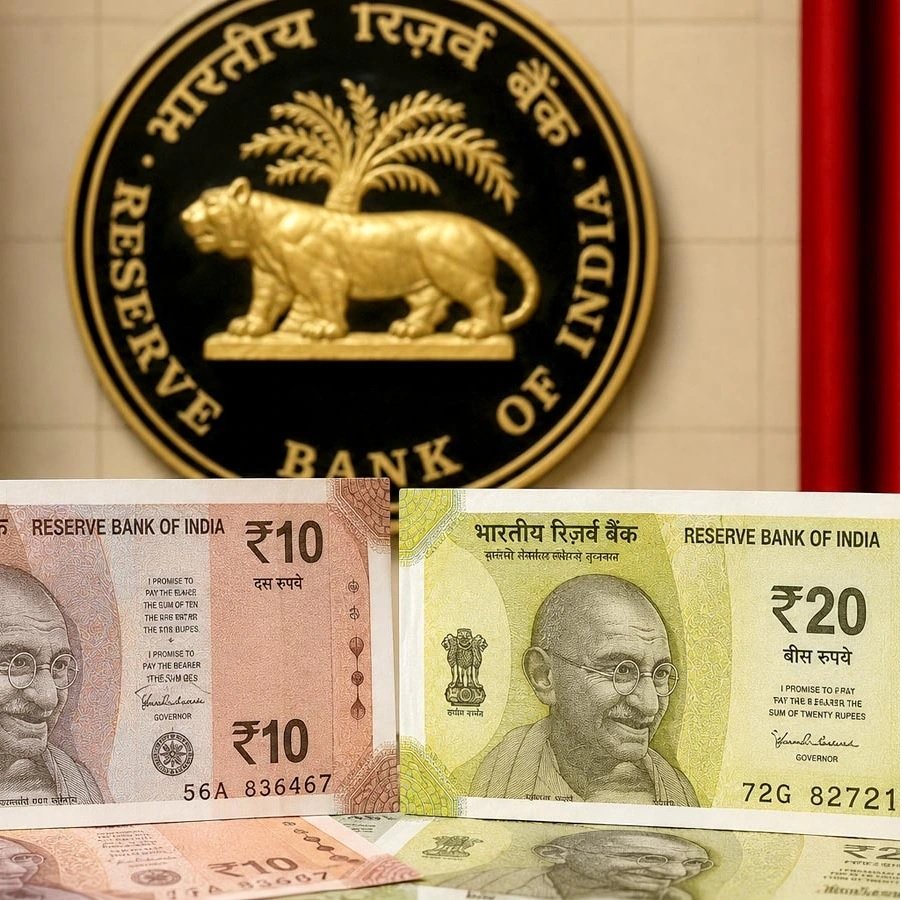
- This marks a significant step towards a potential pilot rollout of polymer notes, expected to begin with lower denominations of Rs 10 and Rs 20.
What are Polymer Currency Notes?
- About: Polymer banknotes are currency notes made from biaxially oriented polypropylene (BOPP) unlike traditional Indian currency which is made of 100% cotton-pulp paper,
- Polymer banknotes are more durable, water-resistant, tear-resistant, and difficult to counterfeit due to advanced security features such as transparent windows and embedded security elements.
- Over 60 countries, including Australia (the first to introduce a full polymer banknote series in 1988), use polymer currency in some form.
- Polymer notes generally last 2.5–4 times longer than paper banknotes.
- Need for Polymer Banknotes: India spends nearly Rs 5,000 crore annually on replacing damaged and soiled currency. Due to the soiling rate (the rate at which physical currency notes are returned to the central bank because they are too dirty, damaged, or otherwise unfit for circulation), about 20–24 billion soiled notes are destroyed every year under the RBI’s Clean Note Policy.
- Lower denomination notes such as Rs 10 and Rs 20 deteriorate rapidly because of frequent circulation.
- Polymer banknotes can reduce replacement frequency and lifecycle costs due to their longer lifespan, while offering greater durability and enhanced security features against counterfeiting.
- The Energy and Resources Institute (TERI) study commissioned by the RBI found that although polymer notes have a higher initial carbon footprint, their longer circulation life results in a lower overall lifecycle carbon footprint as fewer notes need to be manufactured and transported.
- Timeline of Polymer Currency in India:
- 2009: RBI proposed issuing 100 crore Rs 10 polymer banknotes.
- 2012: The Government approved a pilot project in Kochi, Mysuru, Jaipur, Bhubaneswar, and Shimla, chosen for their diverse climatic conditions.
- The project was shelved due to technological challenges and later remained inactive following demonetisation (2016).
- 2026: BRBNMPL invited global bids for polymer substrates, reviving the proposal.
- Concerns:
- Economic: Polymer banknotes cost 30–60% more to manufacture than paper notes, with production costs for low-denomination notes reaching 20–24% of their face value, raising concerns over their cost-effectiveness since a currency is efficient only when its production and maintenance costs remain a small proportion of its purchasing power.
- Their production also depends on polypropylene, exposing costs to global crude oil price fluctuations, while India imports nearly one-fifth of its polypropylene requirement, increasing supply-chain dependence.
- Infrastructure: Transitioning to polymer currency would require recalibration of ATMs, currency sorting machines, vending machines, and banknote processing equipment, leading to additional implementation costs.
- Environmental: Polymer notes raise concerns regarding plastic waste management and the need for specialised recycling facilities.
- Digital Payments: The proposal comes despite the rapid growth of digital transactions, with Unified Payments Interface (UPI) processing over 24,000 crore transactions annually and accounting for around 85% of retail digital payments.
- Indispensability of Physical Currency: Despite rapid growth in digital transactions, currency in circulation has risen to over Rs 41 lakh crore (2025–26), up from around Rs 16–17 lakh crore a decade ago, reflecting the RBI’s “currency demand paradox.”
- Cash continues to be essential for the informal economy, rural and remote areas with limited digital connectivity, small merchants and street vendors, and during emergencies such as natural disasters, power outages, or network failures, when digital payment systems may become inaccessible.
- Therefore, India requires a balanced coexistence of digital and physical currency rather than viewing them as substitutes.
- Economic: Polymer banknotes cost 30–60% more to manufacture than paper notes, with production costs for low-denomination notes reaching 20–24% of their face value, raising concerns over their cost-effectiveness since a currency is efficient only when its production and maintenance costs remain a small proportion of its purchasing power.
RBI’s Clean Note Policy
- About: The RBI announced the Clean Note Policy in 1999 to ensure the circulation of clean, good-quality currency notes and coins while withdrawing soiled and mutilated notes from circulation.
- Objectives: Improve the quality and lifespan of currency, enhance public convenience, and maintain confidence in the currency system.
- Key Measures: Banks must issue only clean notes and not recirculate soiled notes.
- Unrestricted exchange of soiled and mutilated notes at currency chest branches, even for non-customers.
- Stapling of note packets was discontinued and replaced with paper/polythene banding to reduce damage.
- RBI uses Currency Verification and Processing Systems (CVPS) to sort, verify, shred, and briquette unfit notes.
- Banks are encouraged to distribute adequate coins and organise currency exchange facilities, particularly in rural and semi-urban areas.
Currency Management in India
- Constitutional and Legal Framework: The Constitution of India places currency, coinage, legal tender, and foreign exchange under the exclusive legislative domain of the Union Government through the Union List.
- The Reserve Bank of India Act, 1934, provides the legal framework for the issuance and management of banknotes.
- The Coinage Act, 2011, governs the design, production, and circulation of coins issued by the Government of India.
- Role of the Reserve Bank of India: The RBI has the exclusive authority to issue banknotes, estimate currency demand, maintain an adequate supply of notes, and ensure the circulation of clean and good-quality currency.
- It also distributes coins supplied by the Government of India.
- Role of the Government of India: The Government of India is responsible for issuing the Rs 1 note, designing and minting coins, approving the design and material of banknotes based on the recommendations of the Central Board of the Reserve Bank of India, and providing the sovereign guarantee for all banknotes issued by the Reserve Bank of India.

Frequently Asked Questions (FAQs)
1. What are polymer banknotes?
Polymer banknotes are currency notes made from Biaxially Oriented Polypropylene (BOPP) instead of cotton-paper, offering greater durability, water resistance, and advanced anti-counterfeiting security features.
2. Why is the RBI considering polymer banknotes?
The RBI aims to increase the lifespan of banknotes, reduce replacement costs, strengthen security against counterfeiting, and improve overall currency management efficiency.
3. Why was India’s earlier polymer currency pilot project shelved?
The 2009–12 pilot project was shelved due to technological challenges, and the proposal remained inactive following demonetisation in 2016.
4. What are the major concerns associated with polymer banknotes?
Key concerns include higher manufacturing costs, dependence on imported polypropylene, infrastructure upgradation costs, plastic waste management, and uncertain cost-effectiveness amid rapid digitalisation.
5. What is the RBI’s ‘currency demand paradox’?
The currency demand paradox refers to the simultaneous rise in digital payments (UPI) and currency in circulation, driven by continued cash dependence in the informal economy and rural areas with limited digital connectivity.